
- July 28, 2026
- By Rimsha Umer
- In Brakes, Car Glass Repair, Diagnostics
- Tags Car Brakes
- 125
- 0
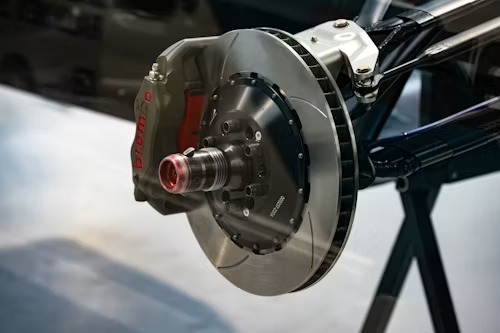
Car Brakes are the most important safety feature of your car. They help you stop quickly. They keep you safe on the road. But how long do they actually last? Most drivers ask this question. There is no single answer. It depends on many factors. Typically, brake pads last between 30,000 and 70,000 miles. Some can even go up to 100,000 miles.
In this guide, we will look at what affects brake life. We will also share tips to help them last longer.
Not all drivers have the same experience. Your driving habits matter a lot. If you drive fast, you hit the brakes hard. This creates a lot of heat. Heat wears down the brake pads faster.
Where you drive also matters. City driving is tough on brakes. You stop at red lights often. You deal with heavy traffic. Highway driving is easier. You maintain a steady speed. You rarely use the pedal.
The weight of your vehicle plays a role too. Large SUVs and trucks are heavy. They need more force to stop. This puts more stress on the pads. Finally, the type of brake pads matters. Some materials are harder than others.
There are three main types of brake pads. Each has a different lifespan.
Choosing the right pad depends on your budget. It also depends on your car type.
Your car will tell you when something is wrong. You just need to listen.
The most common sign is a squealing noise. This is caused by a small metal shim. It rubs against the rotor when the pad is thin. It is a warning signal.
Another sign is grinding. If you hear metal rubbing on metal, stop driving. Your pads are gone. This can damage your rotors. Rotors are expensive to fix.
Do you feel a vibration? If the steering wheel shakes when you brake, your rotors might be warped. This happens from too much heat.
Lastly, watch your dashboard. Most modern cars have a brake warning light. If it turns on, see a mechanic.
You can save money by being a smart driver. First, slow down. High speeds require more braking power. If you drive slower, you use less force.
Don’t “ride” the brakes. This means keeping your foot on the pedal lightly. It creates constant friction. It wears the pads down for no reason.
Coast whenever you can. If you see a red light ahead, take your foot off the gas. Let the car slow down naturally. Only use the brake at the end.
Keep your car light. Remove extra weight from your trunk. A lighter car is easier to stop.
 Importance of brake fluid
Many people forget about brake fluid. It is vital for the system. Brake fluid is a liquid that moves the parts. Over time, it gets dirty. It can also absorb water.
Water in the fluid causes rust. It can make the brakes feel “spongy.” You might have to press the pedal all the way to the floor. Most experts suggest changing the fluid every two years. This keeps the whole system healthy.
You should check your brakes regularly. Most people do this during a tire rotation. Ask your mechanic to look at the pad thickness.
Brake pads start at about 12mm thick. You should replace them when they reach 3mm. If they get to 2mm, it is dangerous.
Visual checks are easy. You can often see the pads through the wheel spokes. If they look very thin, they are worn out.
It is tempting to buy cheap parts. However, cheap brakes are a bad idea. They wear out quickly. They make a lot of noise. They might not stop you in an emergency.
Invest in high-quality pads. They provide better performance. They last longer. In the long run, they save you money. You won’t have to visit the shop as often.
Environment affects your brakes. If you live in a hilly area, you brake more. Going downhill puts a lot of pressure on the pads.
Weather is also a factor. Rain and snow can cause corrosion. Salt on the roads in winter is even worse. It eats away at metal parts. If you live in a snowy place, wash your car often. Make sure to spray the wheel area. This removes salt and dirt.
Can you change brakes yourself? Yes, if you have the right tools. It is a common DIY job. However, it is a safety-critical task.
If you are not sure, go to a pro. A mechanic will ensure everything is tight. They will check the calipers and hoses too. A mistake here can be very dangerous.
How long do car brakes last? It depends on you. On average, expect about 40,000 to 50,000 miles. But your habits change everything.
Drive gently. Listen for strange noises. Check your pads often. Taking care of your brakes is simple. It keeps you safe on every trip. It also protects your wallet.
Don’t wait until you hear a loud grind. Be proactive. Your car will thank you. Your passengers will be safe. Good brakes are the key to a smooth ride. Keep them in top shape and enjoy the road.


