
- November 20, 2026
- By zain ul abidin
- In AI Data Analytics, Car Polish, Diagnostics
- Tags Car Detailing
- 2
- 0
By Dale Prescott
How Regular Car Detailing Protects Your Vehicle’s Value in Australian Conditions
Why Australia’s Climate Is Unusually Harsh on Vehicle Paintwork
How Regular Car Detailing Protects Your Vehicle’s Value in Australian Conditions
Why Australia’s Climate Is Unusually Harsh on Vehicle Paintwork
Australia presents a uniquely demanding environment for vehicle paintwork. The country records some of the highest UV radiation levels on earth, driven by its proximity to the depleted ozone layer over the Southern Hemisphere. That ultraviolet load attacks the clear coat on modern vehicles continuously, accelerating chemical breakdown that would take far longer in European or North American climates.
Coastal regions compound the problem significantly. Salt-laden air carried inland from the ocean settles on paint surfaces, working into microscopic imperfections and promoting oxidation beneath the clear coat. For drivers in areas like the Perth metropolitan region or any community within a reasonable distance of tidal waters, this invisible corrosive process operates year-round regardless of whether the vehicle looks dirty.
Bushfire season introduces another variable that many owners overlook. Ash and ember debris are mildly acidic. When ash settles on a damp or wet vehicle surface and is left untreated, it can etch into clear coat within hours rather than days. Combined with the residue of eucalyptus oils that travel in smoke, bushfire ash deposits are chemically more damaging than ordinary road dirt.
Temperature swings in inland and semi-arid regions cause the paint film and the substrate beneath it to expand and contract repeatedly. Over years, this thermal cycling creates micro-stress in the clear coat, making it more susceptible to cracking and delamination. Taken together, these environmental factors mean that an Australian vehicle left without consistent paint care will deteriorate materially faster than the same model maintained under milder conditions elsewhere.
Car detailing is not a car wash. A standard car wash removes surface dirt and provides minimal short-term protection. Detailing is a systematic process of cleaning, restoring, and protecting every surface of a vehicle to a standard that preserves both its condition and its value.
Professional detailing broadly divides into exterior work, interior work, and specialist services. Exterior detailing covers the paint, glass, wheels, tyres, and trim. It typically progresses from decontamination through correction to protection. Interior detailing addresses the cabin comprehensively: upholstery, carpets, plastics, leather surfaces, glass, and ventilation components. Specialist services include paint correction, ceramic coating application, engine bay cleaning, and headlight restoration.
Modern vehicles are painted using a basecoat-clear coat system. The clear coat — a transparent layer of urethane or acrylic resin — acts as the primary barrier between the coloured basecoat and the environment. UV radiation degrades this resin through photooxidation, breaking down the polymer chains that give clear coat its hardness and gloss.
The progression is predictable. Early-stage UV damage appears as slight dulling or loss of depth in the finish. As degradation continues, the surface begins to look hazy and loses its ability to reflect light cleanly. Advanced oxidation produces chalking — a powdery surface texture where the clear coat has essentially broken down. In the final stages, the clear coat separates entirely from the basecoat and peels, exposing bare paint to direct environmental attack.
Vehicles parked outdoors in Western Australia, Queensland, South Australia, and the Northern Territory face accelerated timelines for all of these stages. A vehicle that might retain a sound clear coat for twelve to fifteen years in a northern European climate can begin showing visible oxidation within five to seven years in full Australian sun without protection.
A thorough exterior detail follows a logical sequence designed to address contamination before correction, and correction before protection. Skipping steps or reversing the order produces inferior results.
Decontamination removes embedded contaminants that ordinary washing cannot shift: industrial fallout, iron particles from brake dust, rail dust, and bonded road tar. These are typically addressed using a pH-balanced iron remover followed by a clay bar treatment, which physically pulls bonded contamination from the paint surface.
Polishing follows decontamination. Machine polishing with an appropriate compound refines the surface at a microscopic level, reducing fine scratches, marring, and water spots while restoring clarity and gloss. The final stage is protection: application of a paint sealant, carnauba wax, or ceramic coating that sits on top of the clear coat, absorbs UV radiation, repels water, and reduces the adhesion of contaminants.
For drivers in coastal environments, this protection layer is the difference between paint that remains viable for resale and paint that requires expensive correction work. Regular paint protection and professional car detailing (https://rockinghamcardetailing.com.au/) are what keep a finish in resale condition under the Australian sun.
Standard exterior detailing maintains paint in good condition. Paint correction is a more intensive intervention required when the clear coat already carries significant defects that routine polishing will not resolve.
Swirl marks are the most common paint correction target. They result from improper washing technique, particularly the use of automatic car washes with rotating brushes or dragging a dirty cloth across the surface. Water etching — caused by mineral deposits left behind when water evaporates from an unprotected surface — creates small craters in the clear coat. Paint correction uses a machine polisher with cutting compounds calibrated to remove a controlled amount of clear coat, levelling the surface below the depth of the defects. It is skilled work, because over-correction removes clear coat that cannot be replaced without repainting.
The interior of a vehicle accumulates biological contamination quietly and steadily. Dust mite allergens, mould spores, bacteria from food and drink spills, and volatile compounds off-gassed from plastics all build up in carpets, seat fabric, and air conditioning systems over time. For occupants who spend significant time commuting, this matters as a health consideration, not merely an aesthetic one.
UV radiation enters through glass and degrades cabin plastics, causing them to become brittle, faded, and prone to cracking. Leather seating that is not regularly conditioned dries out and develops surface cracks that deepen over time. Once leather splits, restoration is costly and the original factory appearance is difficult to fully recover.
From a resale perspective, the interior condition of a used vehicle is one of the first things a prospective buyer assesses. A mechanically sound vehicle with a neglected interior — stained seats, cracked trim, ingrained odour — will consistently attract lower offers than the same vehicle with a clean, well-maintained cabin.
Headlight lenses on vehicles manufactured since the 1990s are made from polycarbonate plastic rather than glass. Polycarbonate oxidises and yellows under UV exposure. A headlight lens that has become hazy or deeply yellowed can reduce effective light output significantly, reducing forward visibility at night and in poor weather. This is a genuine road safety concern, not merely a cosmetic one
Headlight restoration involves removing the oxidised outer layer using abrasive compounds and then sealing the restored surface against further UV attack. It is far less expensive than headlight replacement and restores close to the original light output.
Wheels present a different concern. Brake dust accumulates on alloy wheels and bonds to the surface if left untreated. Beyond the cosmetic impact, heavily contaminated wheels make it difficult to identify early signs of brake wear or fluid leaks during routine visual checks. Regular wheel decontamination as part of a detail keeps the wheel surface clean enough for meaningful inspection.
Frequency recommendations depend on how and where the vehicle is used and stored. A full professional exterior and interior detail once or twice a year is a reasonable baseline for a garaged vehicle in an urban environment with moderate use.
Vehicles parked outdoors in coastal areas should be detailed more frequently — a thorough exterior detail every three to four months provides meaningful protection against salt and UV accumulation. Vehicles used regularly on dirt roads, in areas with heavy industrial fallout, or in regions prone to bushfire smoke benefit from more frequent decontamination between full details.
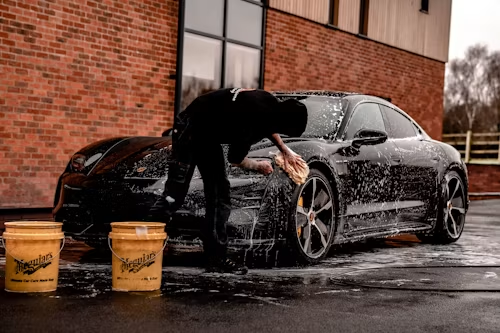
Between professional visits, regular washing using proper technique — a two-bucket method or pressure rinse before contact washing — prevents the buildup of bonded contamination and extends the effectiveness of protective coatings applied during the last detail.
Vehicle maintenance does not need to be elaborate to be effective. A straightforward habit built around a few consistent practices will protect the investment between professional appointments
Wash the vehicle every two weeks using a contact-safe method — rinse debris before touching the surface with a mitt, use a lubricating shampoo, and dry with a clean microfibre towel. After washing, a spray quick detailer product adds a thin layer of protection and enhances gloss with minimal effort. Interior surfaces benefit from a weekly wipe-down of hard plastics and regular vacuuming of carpets and upholstery. Parking in shade or under cover whenever practical reduces cumulative UV load significantly.
Treated this way, vehicle paintwork and cabin materials age at a considerably slower rate than those left to the elements without attention. For Australian drivers facing one of the more demanding climates in the world for vehicle maintenance, consistency in these basic habits — supported by periodic professional detailing — represents straightforward and practical asset protection.
Dale Prescott operates Rockingham Car Detailing, a professional vehicle detailing business based in Rockingham, Western Australia. He works with passenger vehicles, 4WDs, and prestige cars across the southern Perth metropolitan area.


