
- July 18, 2026
- By Rimsha Umer
- In Car Tint
- Tags Tint shades, Tint shades guide
- 131
- 0
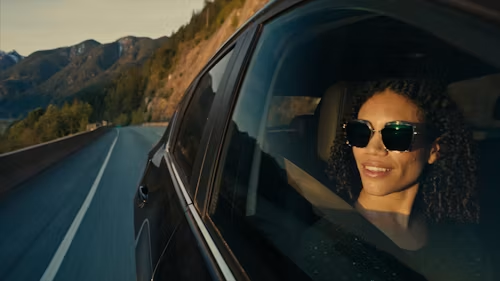
It seems difficult to choose the right tint shades tint shades. You’re in the shop looking at sample cards and each one is a shade different.
Tint shades are determined by the amount of light allowed to pass through the windows. The lower the number, the darker the glass. The larger the number, the more light will enter.
The wrong colour choice can create definite issues. If it’s dark, you may not be able to see well in the dark. If it is too light, you will not enjoy privacy and protection from the cold.
This guide will guide you through the most prevalent tint percentage. At the end, you’ll have the exact one for your car and your daily driving.

Tint shades are quantified by a number known as VLT (visible light transmission). This number indicates the amount of light transmitted through the film and glass.
This is referred to as a 5% tint and allows very little light to pass through. Only 5% transmits, virtually making the glass appear black on the outside. The 70 window tint barely modifies anything, allowing most of the daylight to pass through.
The popular items are in between. Shades of 20%, 35% and 50% provide a good level of privacy while still allowing light to pass through. The majority of motoring public opt for one of these three.
It is similar to car sunglasses. Dark sunglasses will block more glare but may not let you see as well in low light conditions. Light sunglasses allow more light to seep in and provide less protection from the sun.
Your shade choice will make more than just an impact on your appearance. It interferes with your vision of the road, particularly at night, at sunrise, and at sunset, or during heavy rain.
Private is a major consideration as well. A darker color helps to prevent others from looking in your vehicle at traffic lights or when parking. This is a big issue if you tend to leave bags or other electronics out in the open a lot.
Heat reduction also varies depending on the shade darkness. Generally, the darker the tint, the more heat it will block, but it’s as much about the technology of the film as it is about the percentage. A low cost dark film will allow more heat to pass through than a good lighter film.
Today, most tint films offer a similar level of UV protection, no matter how dark the tint is, so long as the film is of high quality. Nevertheless, the correct shade and film quality enhance driving comfort.
Your car’s look is also affected. Very dark windows can be a favorite among some drivers. Other people like a tint that is just subtle.
There are different types of drivers for each shade percentage. Let’s take a look at the most popular of the available choices.
A 5% tint is considered to be one of the darkest tints available. You can only just see in the car from the outside.
It is the darkest of the shades and provides the greatest amount of privacy. Its use is often based purely on style, particularly on SUVs and trucks.
The negative is that the visibility. It is more difficult to see the road and many states prohibit 5% tint on the front window altogether.
If the 20 window tint is still quite dark, then this tint will let a little more light into the car than the 5 window tint. Shapes can be discerned within the car, but there are no details.
This shade is suitable for rear windows and back seats. Provides a robust level of privacy without compromising front visibility too much.
Limits on 20% tint on front windows are only permitted in certain areas, and the rest are only permitted on rear windows. Local rules to check prior to installing are a good way to avoid a headache later.
A window tint rating of 35% is in the middle of the scale. It is enough to provide a level of darkness that would prevent any visible glare and not so dark that it would obscure vision.
Many new tint customers end up picking this tint because it appears to be a safe and balanced tint shade. It is good for all front and rear windows in most locations.
Bright afternoon sunlight can be a problem for 35%’s, so that can be a popular day choice for daily drivers.
The 50% tint has a clear and noticeable effect of making a car window 50% transparent. You can see the driver clearly from the outside of the car, but there is a slight tint on the glass.
This shade is ideal for those who wish to enjoy some heat reduction while slightly improving the appearance of the vehicle without making it look completely different.
It is also a great option for states that have low tint laws as a 50 percent tint is not likely to cause any issues on the front window.
The most popular tint is a 70 window tint percentage. At first glance, it’s nearly like clear glass, but it does reduce some of that glare and heat.
This shade is popular among drivers seeking UV protection without changing the appearance of their cars. In states where there is a law permitting a light strip on the top of their windshields, it is widely used. With 70% tint, you don’t have to worry about it being a legal problem in any country.
Here’s a quick side-by-side look at how these shades compare.
| Tint Shade | Privacy | Visibility | Heat Reduction | Best For |
| 5% | Very High | Low at night | High | Rear windows, bold style |
| 20% | High | Moderate | High | Privacy-focused drivers |
| 35% | Medium | Good | Medium-High | Everyday commuters |
| 50% | Low-Medium | Very Good | Medium | Mild upgrade, strict areas |
| 70% | Low | Excellent | Low-Medium | Windshields, subtle look |
 The first step to selecting a tint is understanding what tint laws are in your area. Each state and country have different window tint laws.
Climate is also a factor. In hot, sunny areas, drivers may prefer darker colors to help keep cool. Depending on the climate, drivers might not need as much protection.
The weather is not the only factor that matters when you’re getting ready to get behind the wheel. If you drive primarily during the day, you can use a darker color without any problems. A night time driver regularly requires more light to pass through for safety.
Although darker tinted shades may appear to be more impressive, they don’t necessarily work out in favor. While a 5 window tint may be a trend to pick up on, it can also make stoplight driving more difficult at night.
Lighter shades sacrifice privacy for true everyday sight. If driving for long periods after dark, a 50% tint or 70% tint will allow you to see clearly in almost any lighting condition.
The best shade really is dependent on the manner by which you use your car. A weekend show car is an application that is okay with bold and dark tinting. A well-rounded and sensible shade is more beneficial for a daily commuter car.
Here there is no point of agreement! The right choice is the one that aligns with your life, your laws in your area and how important looks is over visibility.
Some of the most common tint mistakes that can be made by first time tint film customers. Having an idea of what they’re going to look like will save you money and headaches.
To keep your window tint in the car in good shape, follow these tips:
With proper maintenance you can enjoy your favorite shade for many years. Minimal maintenance makes for a long life.
Don’t roll down new windows for a couple of days
Use ammonia-free glass cleaners to clean tinted glass.
Park in the shade, if possible, to minimise long-term fading.
Inspect edges for peeling and/or bubbling every year
Which tint is in use the most?
35% tint is a popular window tint darkness for drivers. It allows for a good level of privacy, visibility and compliance with the law.
Is it legal to have a different tint on the different windows of one vehicle?
Indeed, there are many people who tint their back windows, but leave their front windows less tinted.
Does a darker tint really absorb more heat?
Not always. The quality of the film is important as well as the shade percentage.
Can you have a 5% tint on the front window?
This will depend on where you live. It is restricted or prohibited on the front windows in many states.
Do tint shades fade?
Quality film roasts over the course of many years. Less expensive film will lose its quality and fade sooner than more expensive film.
Is there a way to try out the tint before I install it?
Yes, many shops provide sample cars or temporary cars that you could view the color of a car.
When selecting tint darkness, privacy, visibility and local laws must be taken into account. For every driver, there is no one right answer.
Consider your driving habits and when and how you drive the most. If you prioritize night visibility, you might go with a lighter color, but if you’re looking for privacy, a darker hue may be best.
Do test a couple of colors to ensure that you are choosing the right shade. The proper tint will seamlessly integrate with your driving experience.


